Dr. Pascal Giessler · AI Principal · Freiburg
The architect against
Cognitive Debt
AI-native transformation is making judgment cheap to skip. Organisations adopt agentic systems they cannot explain, and quietly lose the ability to assess their own decisions. I build sovereign AI for regulated and future-critical DACH organisations, where the harness keeps the judgment inside the house: auditable, exit-capable, resilient.

The problem
The interest comes due later
Cognitive Debt is the slow erosion of an organisation's judgment when AI systems produce decisions no one can any longer explain or check. Like technical debt it stays invisible, until the interest falls due.
Liability
In a regulated context you have to be able to justify every output. From August 2026 the EU AI Act makes traceability an obligation, not a comfort.
Dependence
Hand your judgment to a black box and you cannot get it back. The vendor owns the model, the logic, and eventually the decision.
Fragility
One provider outage, one price change, one deprecated model, and the organisation's ability to decide goes with it.
The answer
Three levels of the same move. Judgment is not a policy you write, it is a property you build in.
01
AI-Native Transformation
Rebuild how the organisation works around AI, rather than bolting AI onto how it already works. The tell is where the judgment sits: a bolted-on rollout buys tools and hopes for output. A native transformation redesigns the decision paths and the review that keeps those decisions explainable.
02
Agentic Engineering & the Harness
An agent is a model in a loop calling tools. The loop is the trivial part. The reliability, and the judgment, live in the harness: the tools you expose, the context you assemble, and the condition on which the loop stops. That is where the engineering belongs, not in the prompt.
03
Sovereign AI
Architecture the organisation actually owns: auditable, so it holds up in front of a board and an auditor. Independent, so no vendor owns your exit. Resilient, so an outage or a deprecation does not take your decision-making with it. Not on-premise for its own sake, but control over model, data, logic, and liability.
Proof
All tools →Instruments, not demos
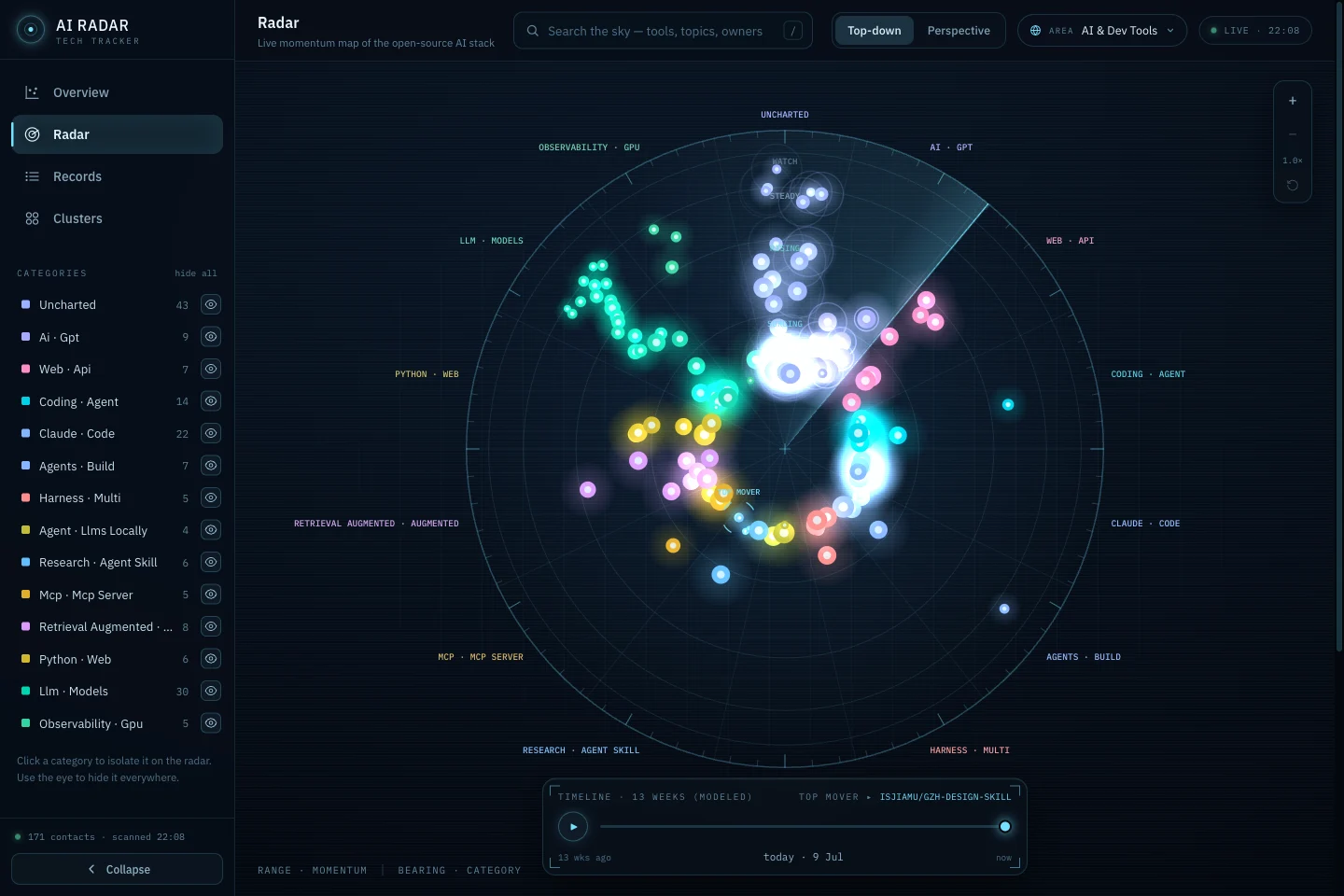
Two tools I built and use. Each is the same thesis in running code: valuable AI forces a decision instead of deferring it.

Latest writing
All essays ↗Das Cognitive Debt Maturity Model: Wie Organisationen ihre AI-Urteilsfähigkeit messen
Ein Reifegradmodell von Black-Box-abhängig bis souverän. Das Cognitive Debt Maturity Model (CDMM) macht die AI-Urteilsfähigkeit einer Organisation messbar.
DEJun 29th, 2026·5 min read
Compliance by Design: Wenn die Architektur das Audit schon mitliefert
Warum DORA, NIS2 und der AI Act dieselbe Architektur-Schicht treffen, und wie drei Entkopplungen sie gemeinsam beantworten.
DEJun 17th, 2026·8 min read
Your Coding Agent Is Just a While-Loop
Strip away the frameworks and every coding agent is the same twenty lines: an LLM calling tools in a loop. Here is why that matters more than the abstractions on top of it.
ENJun 11th, 2026·9 min read
"Ever tried. Ever failed. No matter. Try again. Fail again. Fail better."
Samuel Beckett, Worstward Ho (1983)